
HELICES
BIOLOGICAL PHOTOLITHOGRAPHY
PRECISION PHOTOLITHOGRAPHY SYSTEMS
PRODUCTS
Maskless Array Synthesizers
MAS 2.0
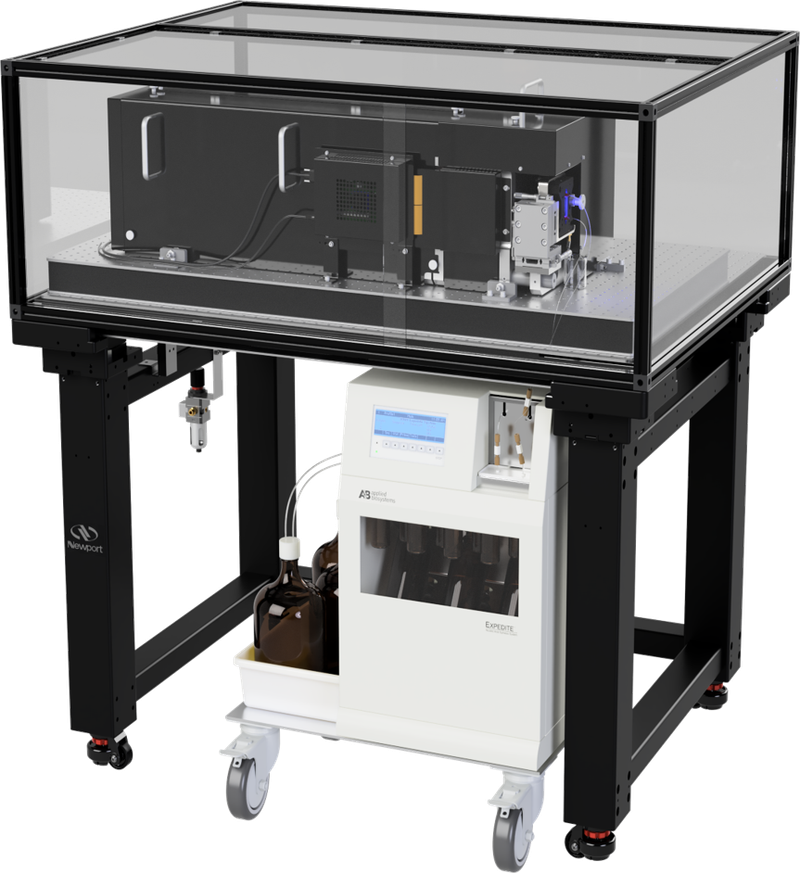
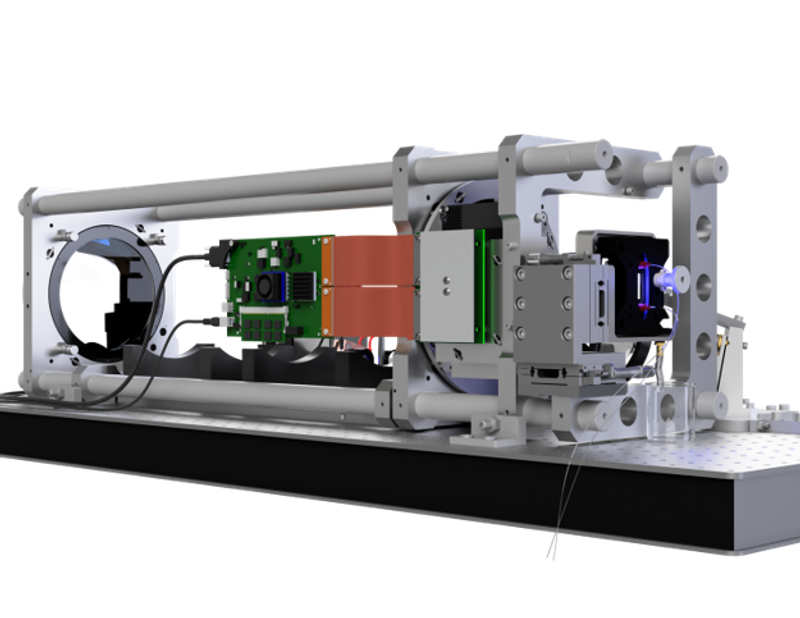
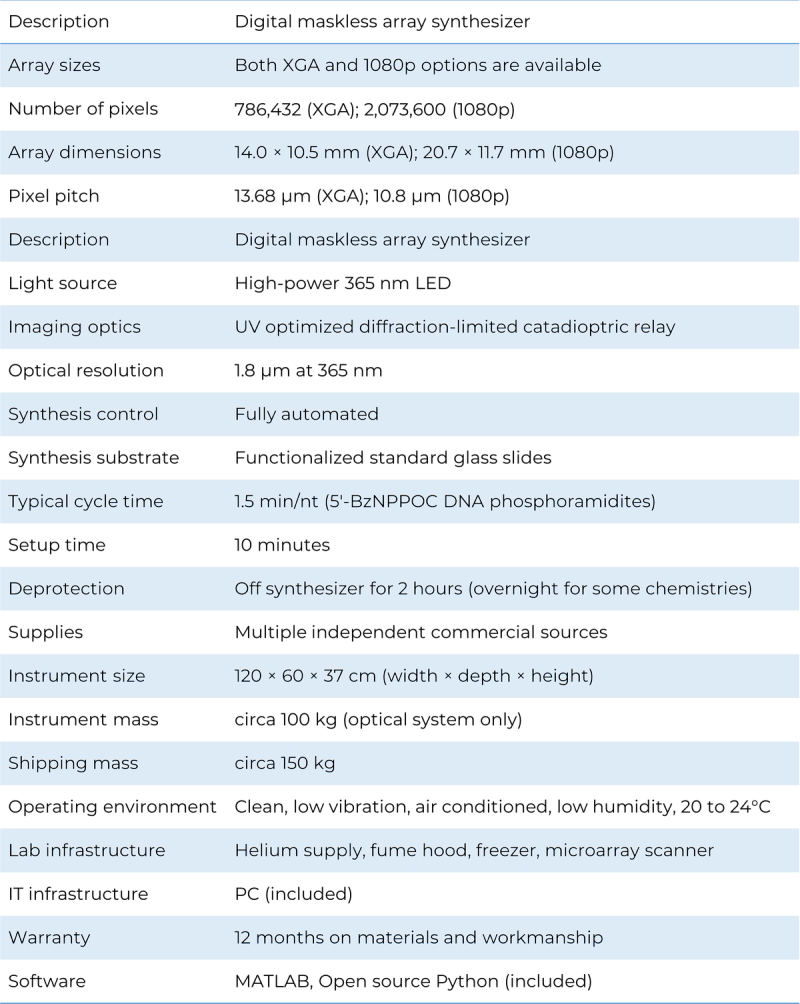
Flexible. Low-maintenance. Robust. Open source. Helices’ next-generation maskless array synthesizers (MAS 2.0) use Texas Instruments Digital Micromirror Devices (DMDs) for high-performance maskless photolithography, enabling the synthesis of complex arrays or libraries of nucleic acids via selective removal of photolabile protecting groups on phosphoramidites. When interfaced with an appropriate fluidics system, the MAS 2.0 enables flexible synthesis of nucleic acids at an ultra-large scale. Choose either an XGA DMD or an 1080p DMD for synthesis scales of up to 786,432 or 2,073,600 unique oligonucleotide sequences, respectively. The MAS 2.0 features a modern optical system with a high-power ultraviolet LED light source for fast and efficient photochemistry. The LED light source, combined with the use of DMD technology, results in a robust scientific device with minimal maintenance requirements. The MAS 2.0 is an open-source scientific instrument. Access to both the hardware and software source code is unrestricted, and you are free to modify either to achieve your experimental objectives.
TECHNOLOGY
Nucleic Acid Photolithography.
Helices develops photolithography systems designed for massively parallel synthesis of nucleic acids at ultra-large scales.
Light-directed massively parallel synthesis
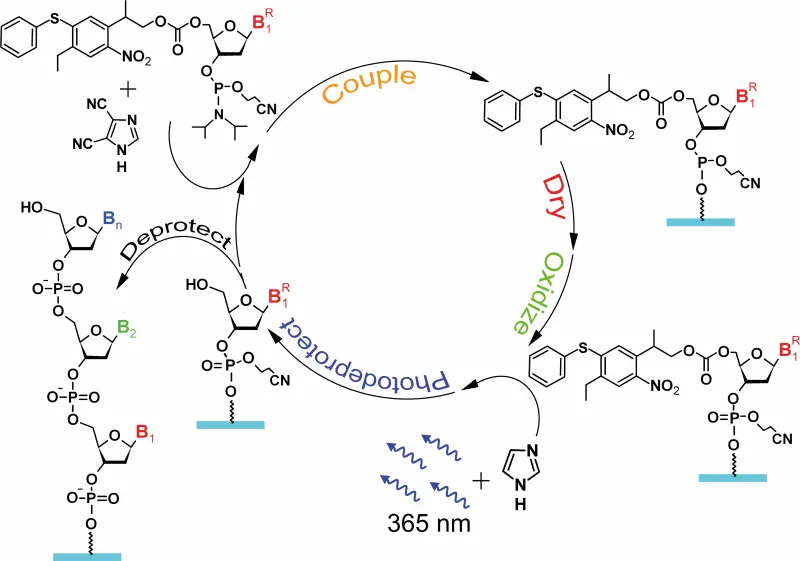
Fast and efficient. Microarrays and libraries. Surface-based phosphoramidite chemistry is faster and more efficient than the already highly optimized column-based, solid-phase synthesis of nucleic acids. Typical coupling reactions of DNA phosphoramidites are reduced to about 15 seconds, and similar reductions are observed for other reactions and washing steps. Light-directed synthesis uses UV light to selectively remove photolabile groups protecting the 5′ hydroxyl group of the pentose sugar. The photolabile group directly replaces the acid-labile dimethoxytrityl (DMTr) used in standard solid-phase synthesis, enabling precise spatial control of deprotection, and thus massively parallel synthesis of nucleic acids on a surface. Phosphoramidites with a photolabile group on the 3′ hydroxyl group are also available, allowing the “reverse” (5′ to 3′) synthesis necessary for spatial transcriptomics microarrays, or other surface-based assays requiring access to the 3′ hydroxyl group. Many bioanalytical applications require the use of surface-bound DNA, i.e., DNA microarrays. These include gene expression profiling, SNP genotyping, and the identification of sequence preferences of transcription factors and other proteins across the entire genome. The MAS 2.0 from Helices additionally allows the synthesis of microarrays of other nucleic acids, such as RNA, as well as the use of natural non-canonical variants, including 2′-O-methylation and other epigenetic /epitranscriptomic modifications, and engineered modifications useful in nucleic acid therapeutics, such as 2′-fluoro RNA, 2′-fluoro-arabinonucleic acid, and phosphorothioate linkages. Well-developed chemistries also allow the oligonucleotides to be cleaved from the surface as libraries available for applications, including fluorescence in situ hybridization, sequence enrichment, and digital data storage in DNA.
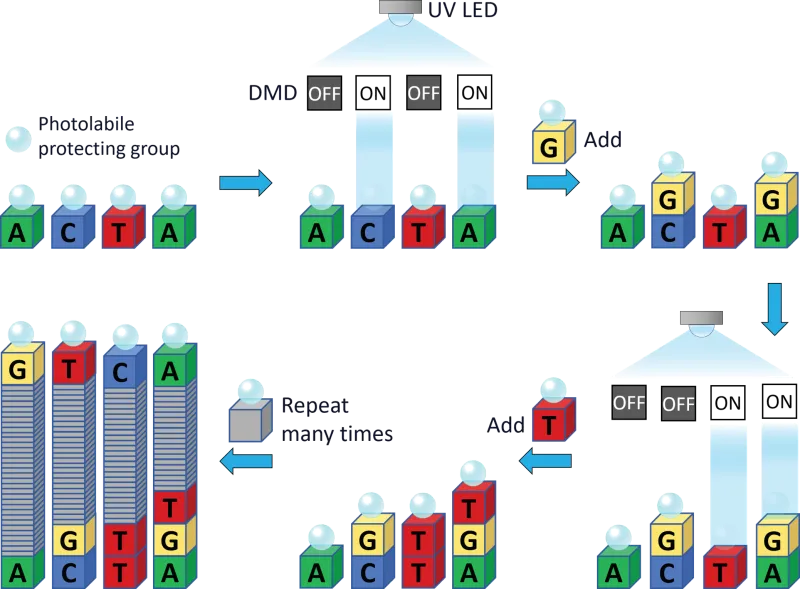
Photolabile protecting groups
Phosphoramidites for light-directed synthesis with the MAS 2.0 from Helices must be equipped with a photolabile group sensitive to 365 nm light. Three generations of such photolabile groups are available, NPPOC, benzoyl-NPPOC and thiophenyl-NPPOC, differing in their sensitivity to UV light. Typical photodeprotection times with the MAS 2.0 are 60 s (NPPOC), 30 s (Bz-NPPOC), and 6 s (SPh-NPPOC). Several suppliers provide DNA, RNA, and alternative nucleoside phosphoramidites with these protecting groups.

Phosphoramidite chemistry
Light-directed massively parallel synthesis with the MAS 2.0 uses a lightly modified form of the cycle-based phosphoramidite chemistry widely used for solid-phase oligonucleotide synthesis. The primary modification is the use of phosphoramidites with a 5′ (or 3′) photolabile group. All other reagents and solvents are those used in standard solid-phase synthesis. Nevertheless, the chemical protocols for light-directed nucleic acid synthesis are additionally optimized, e.g., typically with shorter coupling times due to the lower scale of synthesis and simple, unstructured surface.
TEAM
Meet the founders.

Erika Schaudy
CEO / Co-Founder

Mark Somoza
Co-Founder

Jory Lietard
Co-Founder
CONTACT
How to get in touch.
helices.bio (at) gmail.com
UZA II Josef-Holaubek-Platz 2 1090 Vienna Austria